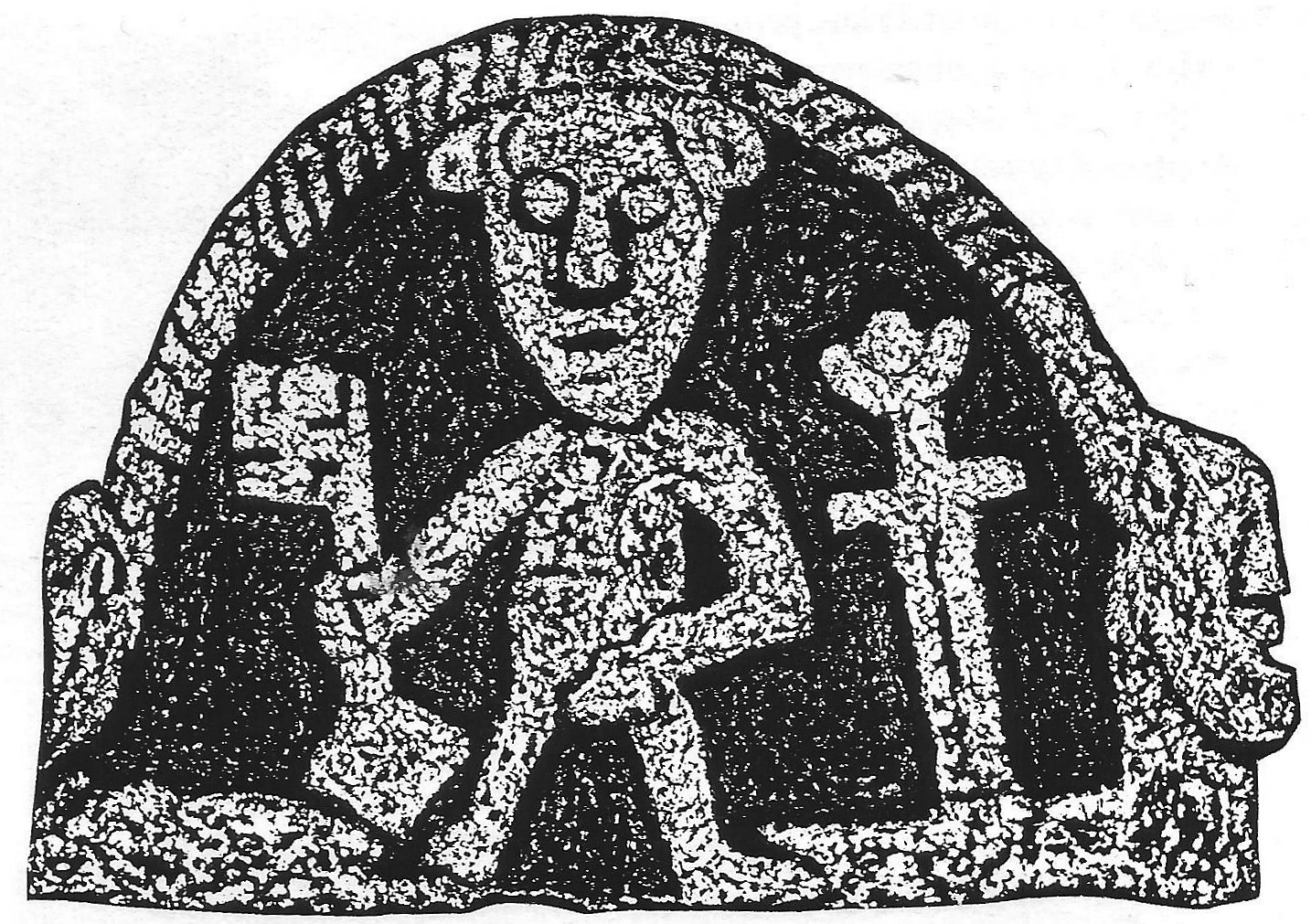
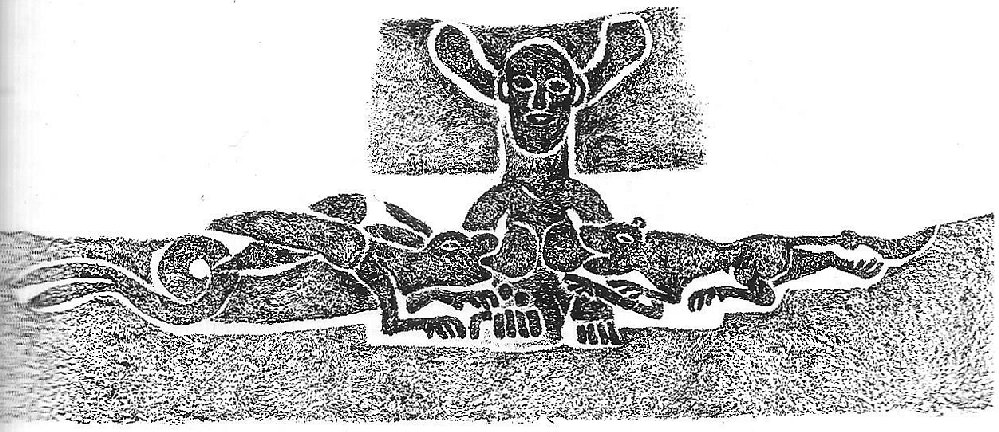
A tympanum from Gosmer in East Jutland
is an example of mixed (if not confused) iconography,
for it is a glorious depiction of Terra Mater.
A hare
(Romanesque symbols of lasciviousness)
and a fox, dog or wolf (also highly symbolic) attack her hair,
which is crowned by a possibly feline head. Thus there are overtones
of
the Whore of Babylon as well as Mother Earth.
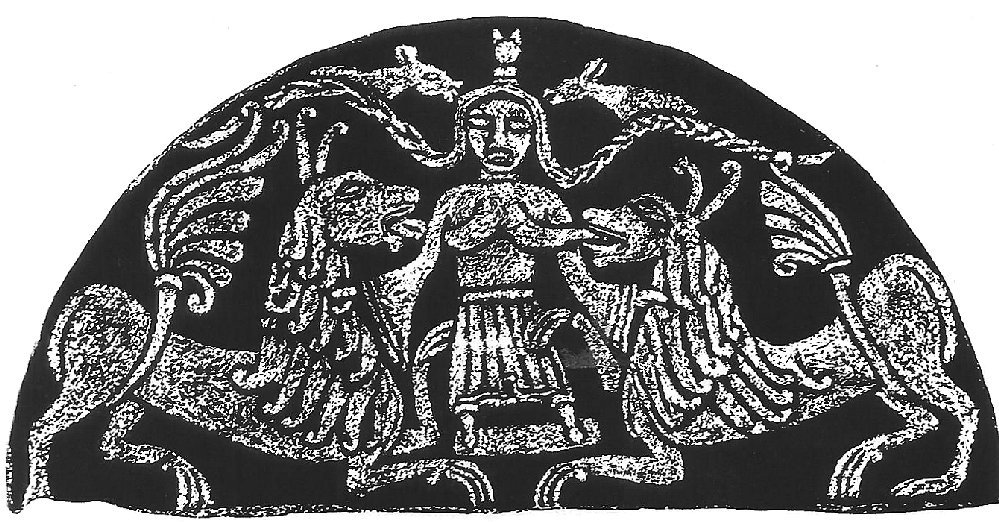
Rubbing by Søren Nancke-Krogh, from ICO #3. 1974
I first saw this figure (a sophisticated rubbing by Søren Nancke-Krogh)
in the little Danish art-magazine ICO.
In the first
number there was an article by Jørgen
Andersen,
suggesting that at least some 'sheela-na-gigs'
are fertility figures, either pregnant or giving birth, in literal interpretation
of Jesus'
and Paul's promise of rebirth through Jesus' 'way, truth and life'.
These include a corbel at Rétaud in Western France, and the statue
from Dowth.

He suggests that the letter T beside the Copgrove figure in Yorkshire stands for Terra,
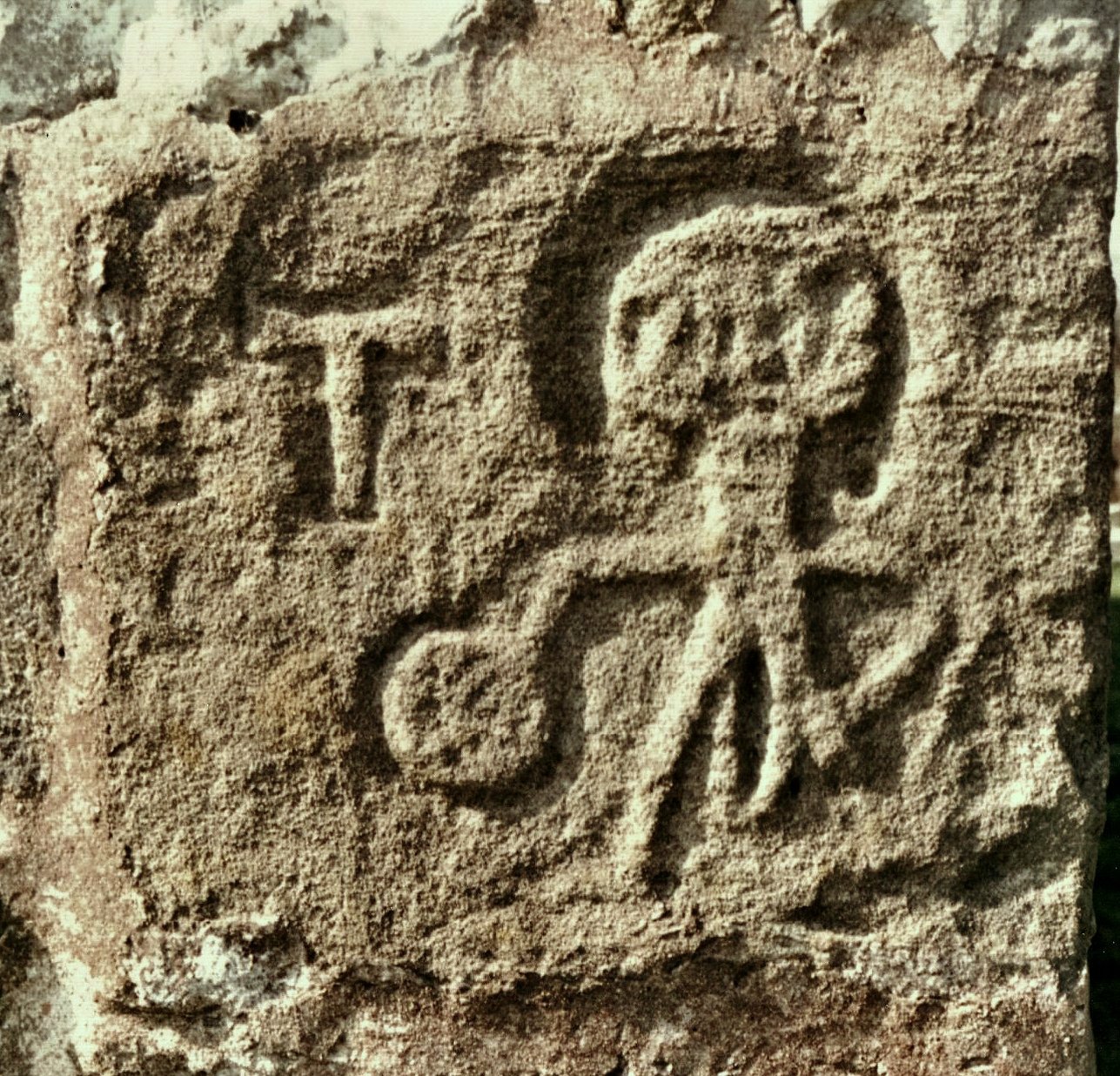
and that her
vagina is the door into the Kingdom of God,
citing also the Cavan exhibitionist.
(Andersen, a famous 'womaniser', possibly believed this to be true).
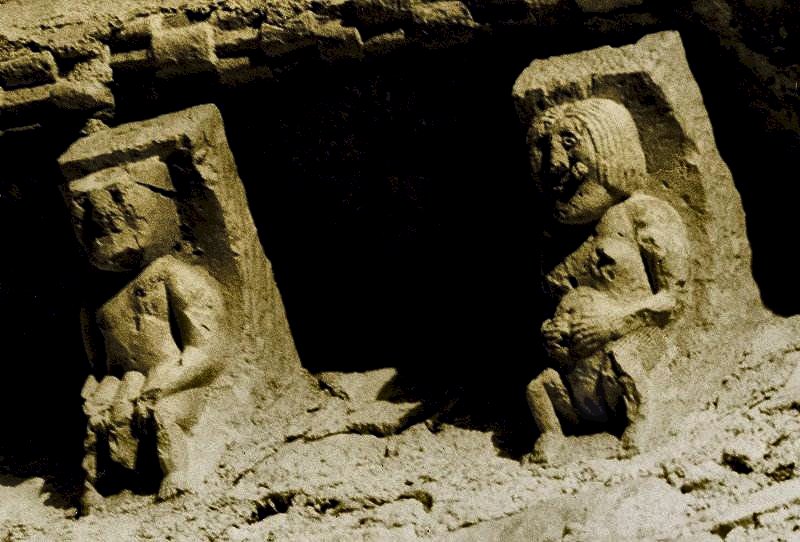
He was of course unaware of the corbels at Santa
Marta del Cerro (Segóvia) -
the male with very large, cylindrical penis and the woman clutching
her pregnant belly:
the pair are possibly an encouragement to copulate and populate.
This was the first Spanish church that I vsited after landing at Baracas airport, Madrid, in 1978.
My
argument on this site is as it was in Images of Lust (1986),
that most Romanesque exhibitionists
had quite a different
(though not necessarily opposite) message.
A longer adjoining
article by Erling Rump discusses 'Woman with Beasts'
a small category in Romanesque sculpture discussed elsewhere.
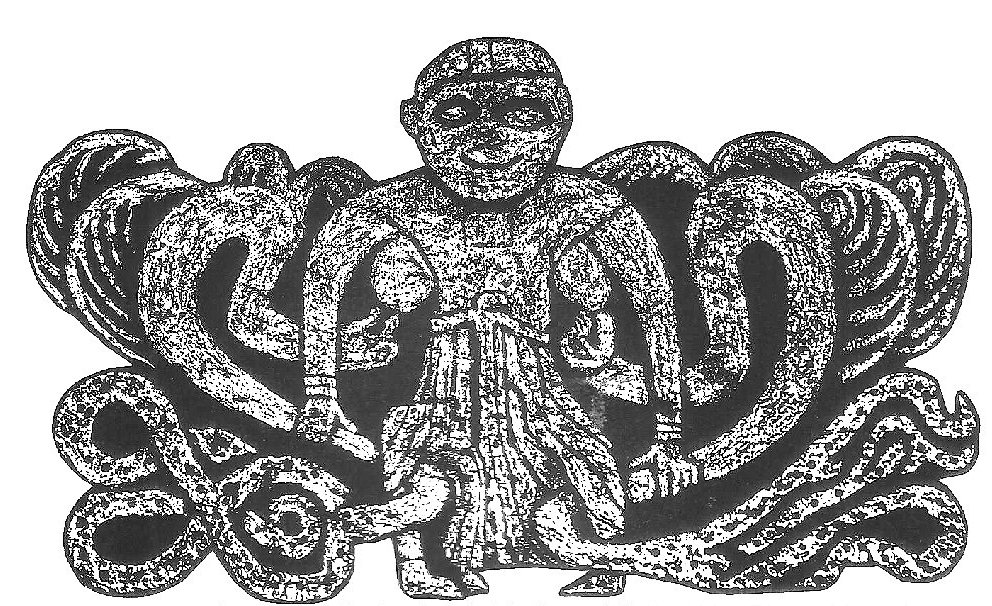
Bråby, Zealand
Vester Egede, Zealand.
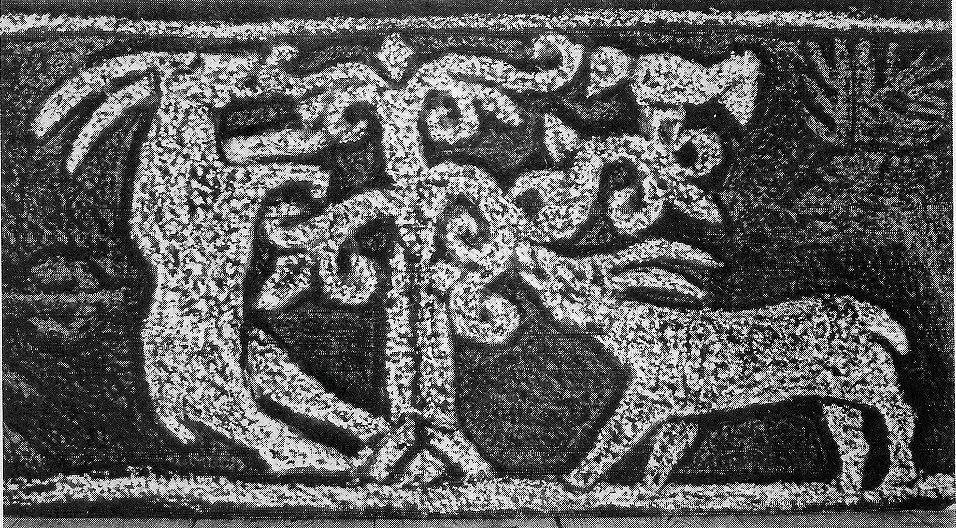
The Tree of Life anthropomorphised.
Lihme, Jutland.
see also: zxMassa.htm and terra.htm
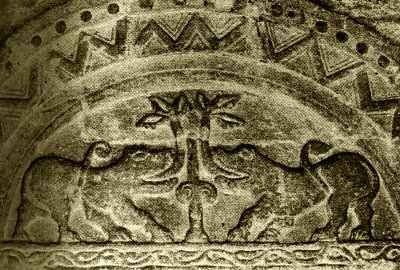
Fritwell, Oxfordshire

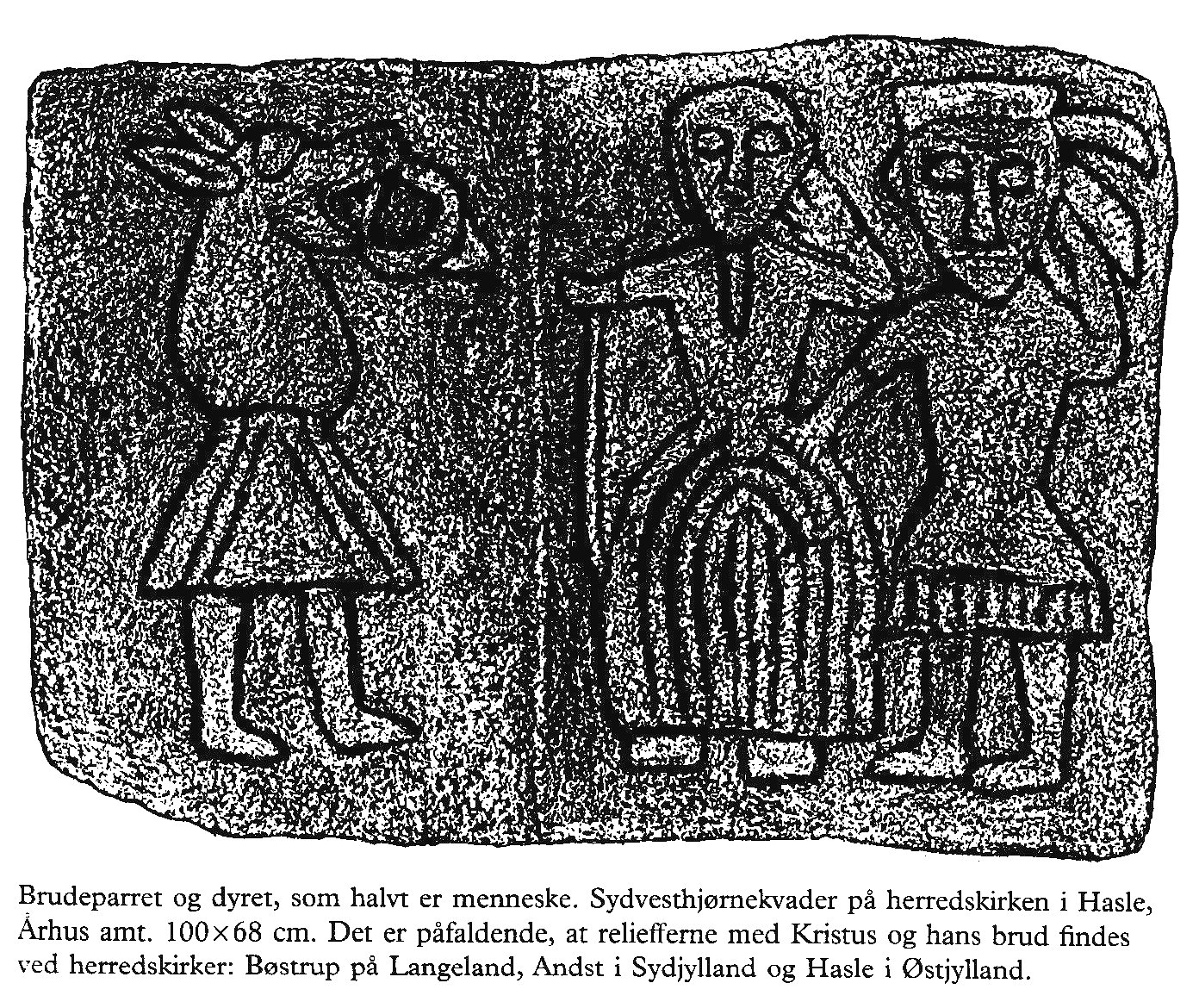
At Hasle, near Århus in Jutland are these remarkable figures.
The pair on the right represent holy matrimony, possibly Jesus and his
Bride (= the Church),
who feature elsewhere in Denmark.
Meanwhile, a depiction of St Peter at Gelsted church (Fyn) shows
him with head-dress (or teddy-bear ears)
holding an enormous key in his right hand as if it were a spade, while
clutching his scrotum with his left.
Further to his left a sword with a flowering (?) pommel is rooted in
(or just embedded) in the ground.
St Peter the gardener ? Surely not...unless the key-spade is designed
to restore us to the Garden of Eden!