HORNED FIGURES
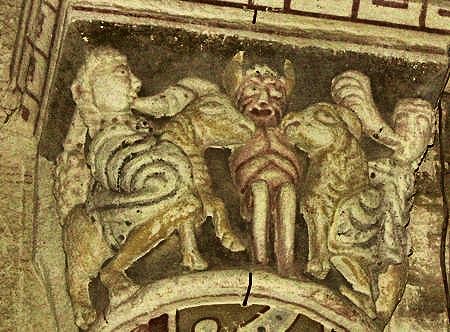
Gannat (Allier) : Eglise Sainte-Croix
A mutilated male exhibitionist squats while grasping horns which sprout
from his head.
He seems to be a tongue-poker as well.
Sheep are common and still economically-important in Auvergne,
where there were ram-cults in Celtic and Roman times.
(See the ram-porters at Brioude (Haute-Loire).
The figures on either side seem to be penitent and/or suffering.
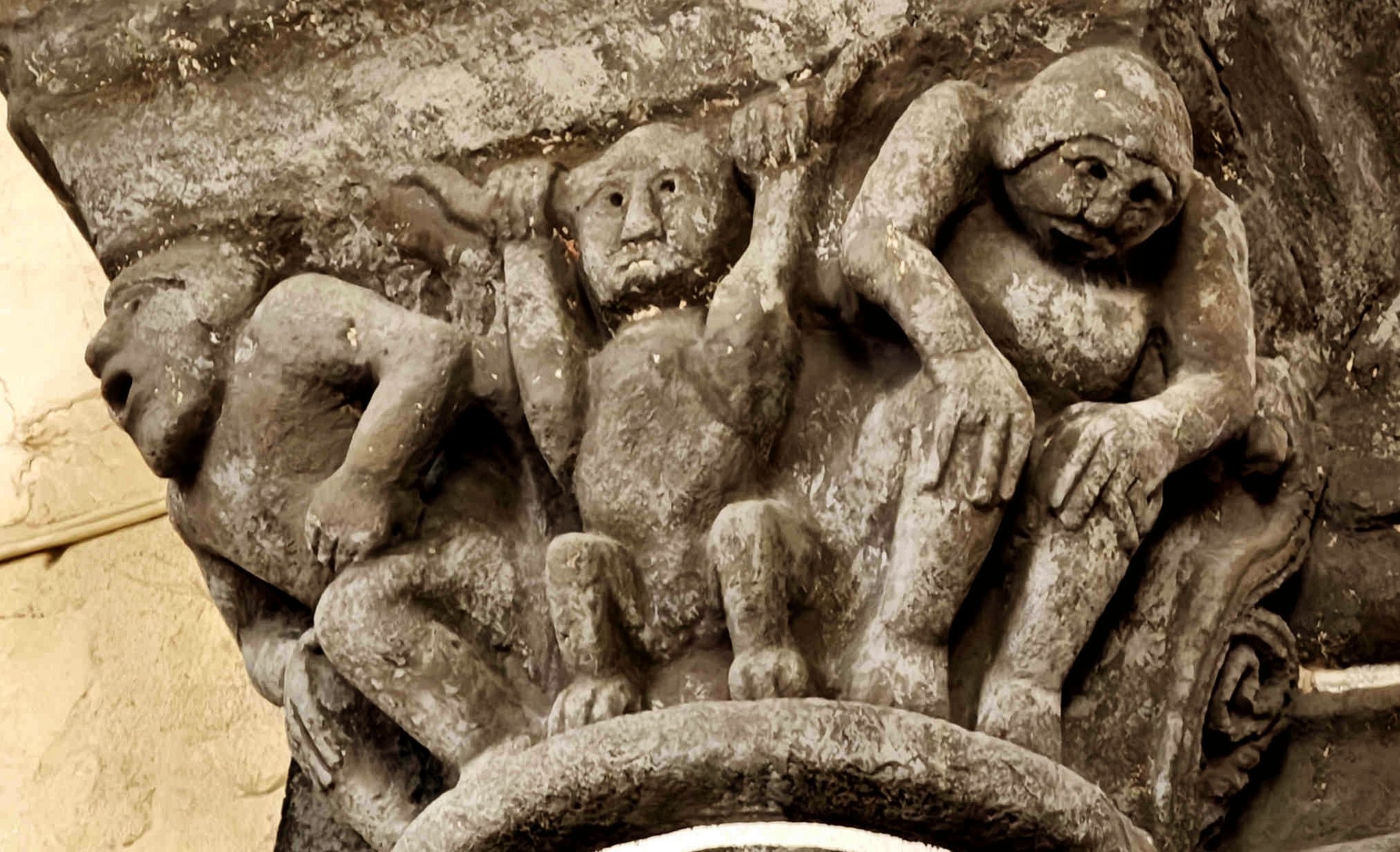
photo by Martin M. Miles
Compare with the sculptured cross at Kells in Ireland,
where the horned figure, between 'whispering beasts', has a beard and a tail;

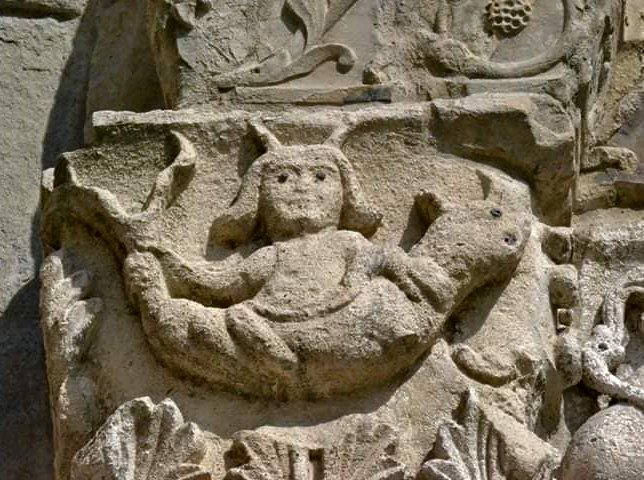
a horned mermaid at Parma;
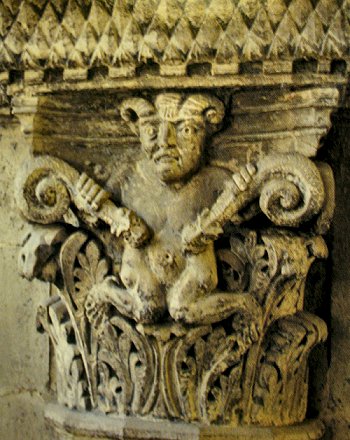
a figure with ram's horns at Vienne, in another sheep-raising area...
...and at Panizares (Burgos), where sheep may still be raised.

At Bourbon-l'Archambault
(Allier) two hornblowers mounted on (hornless) rams
direct their blasts towards a devilish, horned ?female figure with raised
skirts.
See the page on Horn-blowers.
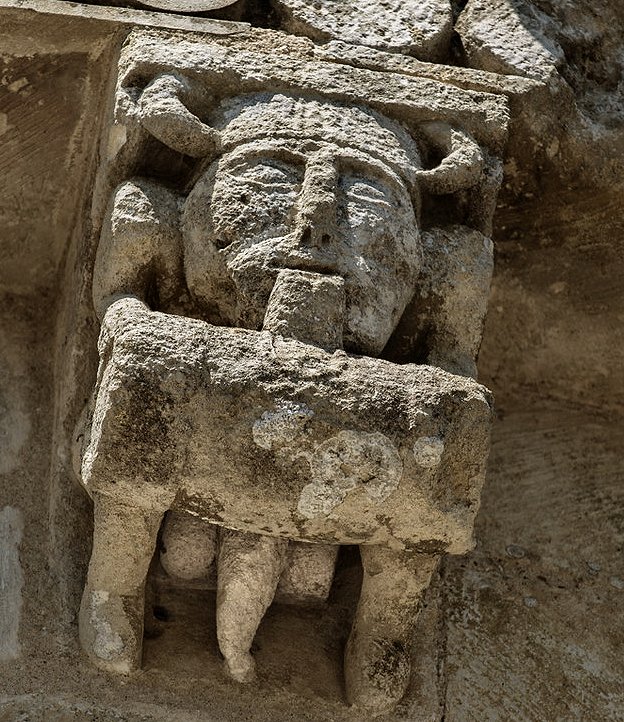
A dolio-player is wearing horned cap at Givrezac (Charente-Maritime);
and a jongleur-figure with horned cap at Targon also in the Charente-Maritime
(close to a female vulva-puller).

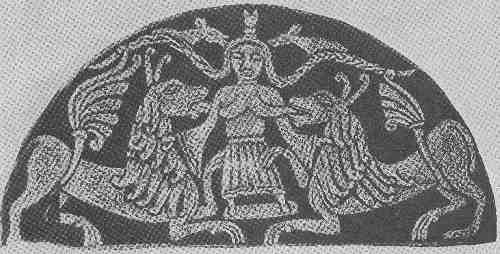
(A tympanum at Gosmer in East Sjælland has truly got its iconography
mixed up,
for it is a glorious depiction of Terra Mater suckling lions - except that
they are horned
like the Beast in the Book of Revelations. Two ?hares (Romanesque symbols
of lasciviousness)
or foxes, dogs or wolves (also highly symbolic) attack her hair,
which is crowned by a possibly feline head. This is the Whore of Babylon.)
Horned figures are ubiquitous in ancient art. Cernunnos was a Celtic horned
god.
The horned Pan was transformed into a devil or the devil...
See also the page on Horn-blowers.